
The problem of Passion
Love & Basketball, Brian Eno, and Nourished by time once more

When everything feels connected and charged by every other thing, working out of the bounds of what you know feels so consequential, as if failure in an out-of-bounds attempt is this net-negative to every connected thing. That is what’s so horrifying about passion to me. But I think I’ve come to give more grace to passion recently–it is out of known bounds, it is poetic, and it’s exciting because it is driven by gut–passion can be inspired by and displayed to the external world, but it is held internally. E.g. if I’m passionate about taking my iron supplements every day, I can resolve something internal (iron deficiency) with the external world (iron supplements).
I watched Love & Basketball for the first time in a few years, which is maybe the fuel to this post. My first viewing some years ago was also my first time hearing ‘Sweet Thing’ by Rufus, and it inspired a very necessary deep dive into Ms. Khan’s former band. (That song is its own ode to passion in the love realm, with Chaka Khan loving you anyway, ‘even though you cannot stay.’) Love & Basketball follows two neighbors from childhood into early adulthood, Monica and Quincy, whose initial encounters at age eight were rooted in a dismay toward each other and a mutual love and respect for basketball. They’d wrestle and quarrel and poke fun at their respective partners until, one fateful prom eve, ‘I Want to Be Your Man’ by Roger began to play and Quincy realised his affinity to the song’s title, that he’d longed for Monica and wanted to be with her.
The film holds it’s title accountable–it really is just about love and basketball. The words are synonymous by the end of the movie, though–ultimately they get together, break up, and get back together in what looks like their mid-late 20s after some trial and error with their athletic careers. The final scene depicts Monica in the WNBA with Quincy sitting court-side, baby in hand, completely content with being unable to become a professional basketball player post-injury because, it was never necessarily about basketball. The root of it was always passion, finding something you’re willing to sacrifice for, something (to me) totally driven by gut feeling, and how could you not be passionate about making a life with the love of your life while she’s pursuing her dreams? Basketball husband prophecy.
While on the topic of movies and passion, I’m thinking about the documentary Eno and watching Brian Eno create a song in real time. There is a sincerity in his process that is just another reflection of his person, someone so indebted to nature and all that surrounds him, seeking out a way to repay these surroundings with an offering, a reaction. In the version we watched some time ago, Eno began to explain the framework of a piece he was working on, playing one part that was the base of the song, or, what he claimed to be the ground, and another part that resembled the sky. These mosaics of the world around him are married to every song he’s touched. I don’t know if I’d felt so moved to tears before listening to a song like “The Big Ship” or “Spider and I,” and it’s because Eno is embodying a feeling, a moment where he attempts (and succeeds, obviously) to capture and materialize a feeling for others to cope with and relate to. He produces the sonic elements of passion, seeps color and light into his music.
In ‘Here’s the Thing,’ Courtney Barnett says she isn’t afraid of heights, she’s ‘just scared of falling’. This and ‘Max Potential’ were released years apart, but I’ve found them in dialogue with one another very distantly. Here, Barnett’s singing about writing instead of calling, speaking to a feeling of stagnancy, a stunted passion. Her chorus is riddled with an embarrassment about seeming annoying and distance between her and this person she cannot stop thinking about. This cycle of passion is totally isolated, and counters Nourished by Time’s open passion about his ‘other,’ the one he is willing to passionately wait for, the one he wants to know he’s in love with. Barnett’s letters-written embody regret and the unsaid, while ‘Max Potential’ is loud and all-telling, content with the state of things as a result of the singer laying his passion n love alllll out.
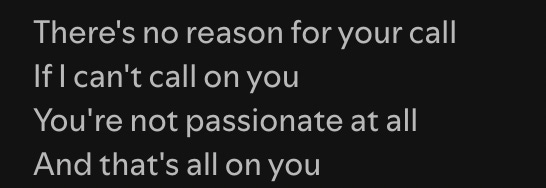
I guess I’ve found that passion is reflected in discipline, not necessarily isolation. Maybe passion can come to fruition in isolation for some people, I’ve just realised that it doesn’t always work like that for me, and I thought it was an issue or negated my bouts of passion but I’ve learned that discipline and working toward a thing (love, job, grad school, getting good at chess) doesn’t have to happen in some dark and lonesome way. That’s what brings me to those lyrics in ‘Max Potential’. The unreciprocated ability to call comes back to a lack of reciprocated passion, a dissonance in drive for a romance the singer is calling for. His passion is not isolated: it is loud, ever-present and held closely by an electric guitar. What’s so special to me is how he wrote this internal feeling and created the setting of it with instruments, his voice etc. Like, this thing that goes on in your gut and is so personal is listened to and felt deeply by a whole other person who has that same thing going on in their gut. Many songs do this to me, but this one and its shameless front have had a particular effect as of late.
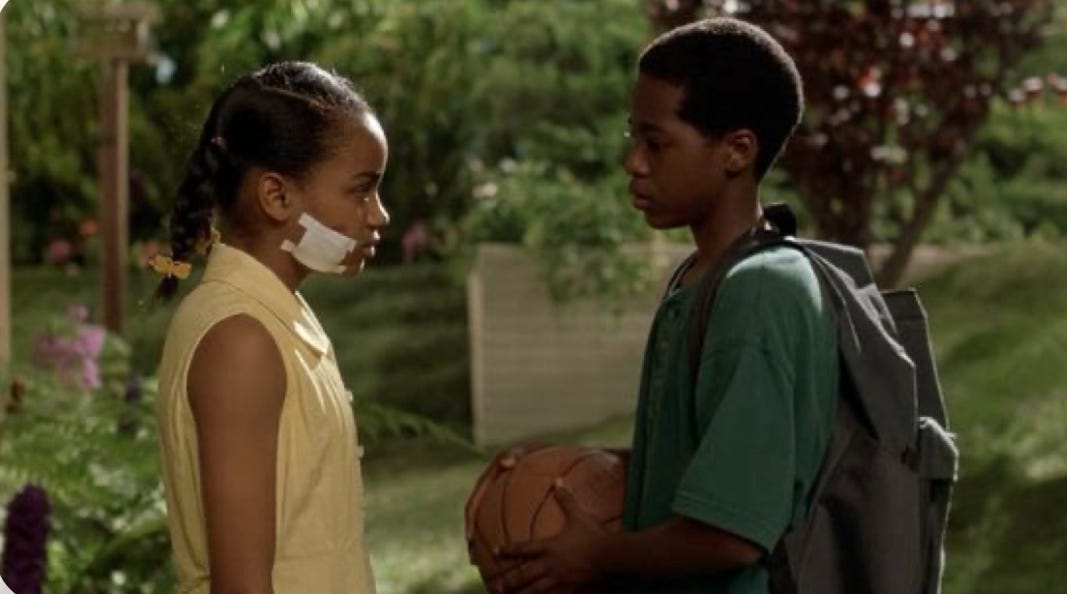
So, while passion starts as this internal feeling, it still requires external commitment to the thing: I see it in Monica and Quincy, and I hear it in the tides of Ambient 2.
I played ‘Max Potential’ and a few other songs on my new radio show on Franknews, an awesome independent news/radio station. You can listen to the first episode here. Ciaoo